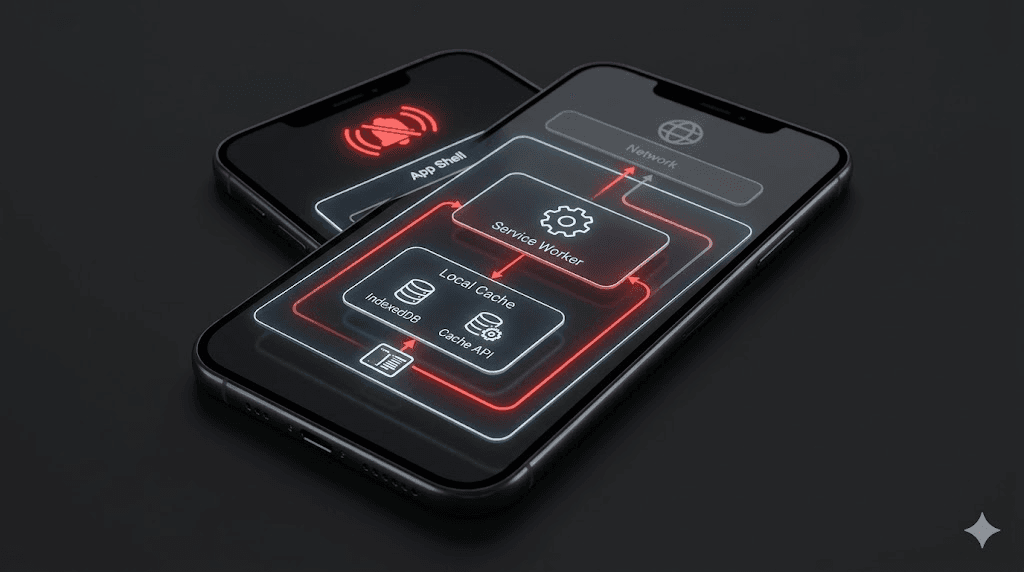
Offline-FirstInstallableApp-Like Experience
Mainland-licensed business based in Dubai, UAE

PWA Development Dubai

Deliver app-like experiences on the web. Progressive Web Apps work offline, install on home screens like native apps, send push notifications, and feel lightning-fast. PWAs combine the reach of the web with the capabilities of native apps—without app store friction, approval delays, or separate iOS/Android codebases. Perfect for e-commerce, field service, and mobile-heavy businesses where connectivity is unreliable.

Get Free Consultation
Atlio service illustration
Progressive Web App Capabilities

Native app features, web distribution

We build PWAs with offline support, push notifications, home screen installation, and app-like performance—all accessible via URL.

Works Offline

Works Offline

Users access your PWA even without internet connection. Service workers cache content locally, keeping your app functional on unreliable networks.

Installable on Home Screen

Installable on Home Screen

Users install your PWA like a native app—directly to home screen on iOS, Android, or desktop. No app store required, instant updates.

App-Like Performance

App-Like Performance

PWAs feel like native apps: instant load, smooth animations, responsive touch, and full-screen experience without browser chrome.

Push Notifications

Push Notifications

Send push notifications to users even when the app is closed, re-engaging them with timely updates, offers, and alerts.

Responsive & Mobile-Optimized

Responsive & Mobile-Optimized

Built mobile-first, PWAs work perfectly on phones and tablets—where most of your users are accessing you.
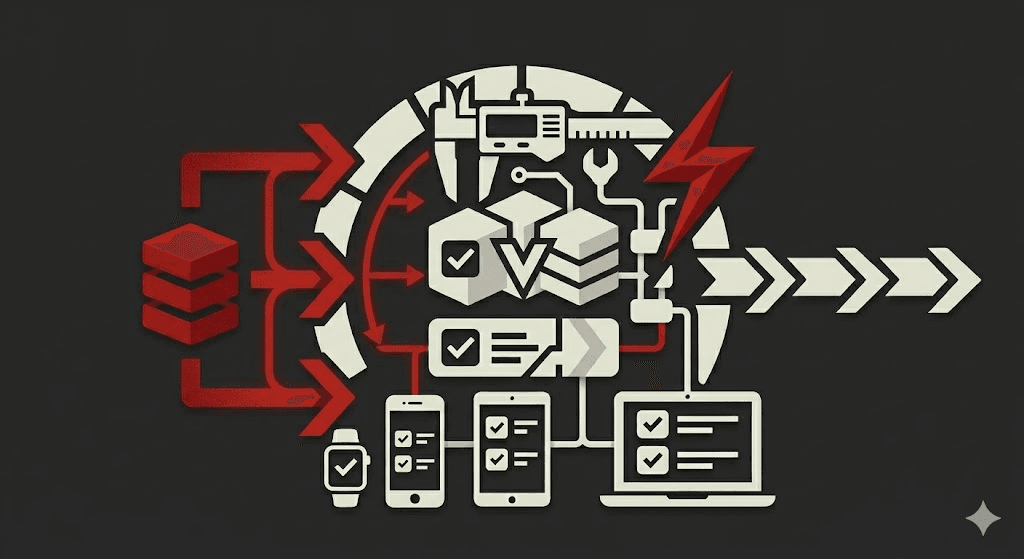
SEO-Friendly

SEO-Friendly

PWAs are discoverable by search engines, shareable via URLs, and rank in search results—advantages native apps do not have.

Common Challenges

Are you struggling with...

Users with poor connectivity cannot access your site

People on 3G, 4G, or unreliable networks experience slow load times, timeouts, and inability to use your service when it matters most.

Your site does not feel like an app

The web experience is clunky compared to native apps. No home screen shortcut, no offline support, no push notifications—users prefer the app store.

Field teams cannot work offline

Delivery drivers, sales reps, and field technicians lose productivity when internet drops. They cannot access customer data, update records, or complete jobs offline.

You cannot compete with native apps

Native apps work offline, push notifications, instant load. Your web app lacks these features. Users choose the app store over your website.

You are not alone. We help UAE businesses solve these exact challenges every day.

Related Services

Progressive Web Apps Work Alongside Other Services

PWAs often complement mobile development, web development, and modern frameworks. See how our other services work together with PWAs.

Web Development Services

Full-service web development for any website type: corporate sites, e-commerce, portals, and custom platforms.

Progressive Web App Services We Deliver

From PWA development to native app conversion

Whether you are building a new PWA from scratch or converting an existing website into an offline-capable app, we deliver production-ready solutions.

Progressive Web App Development

Progressive Web App Development

Build production-ready PWAs from scratch with service workers, offline support, push notifications, and installation capability.
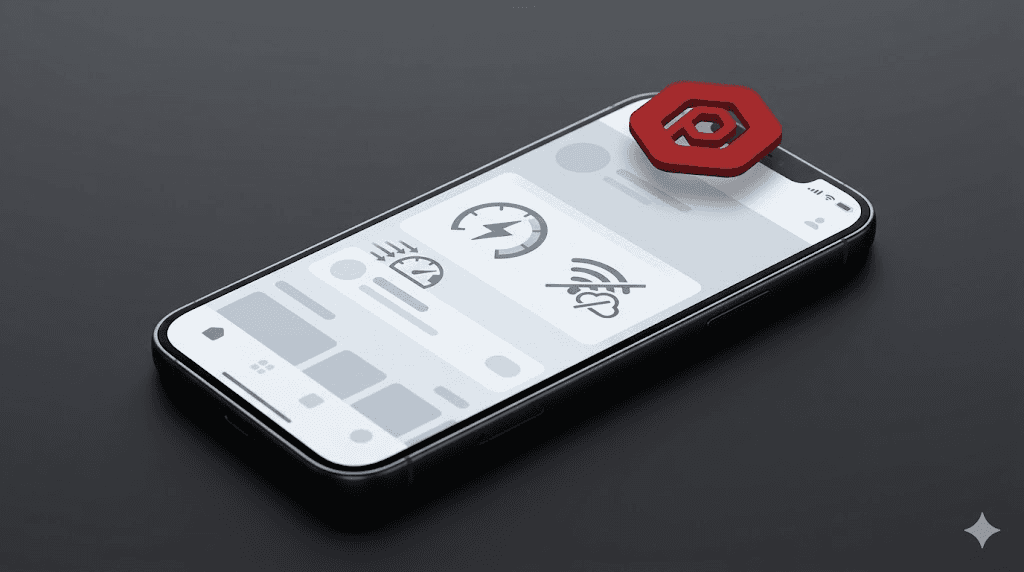
Service Worker Implementation

Service Worker Implementation

Implement service workers for caching strategies, background sync, offline fallbacks, and selective content fetching.
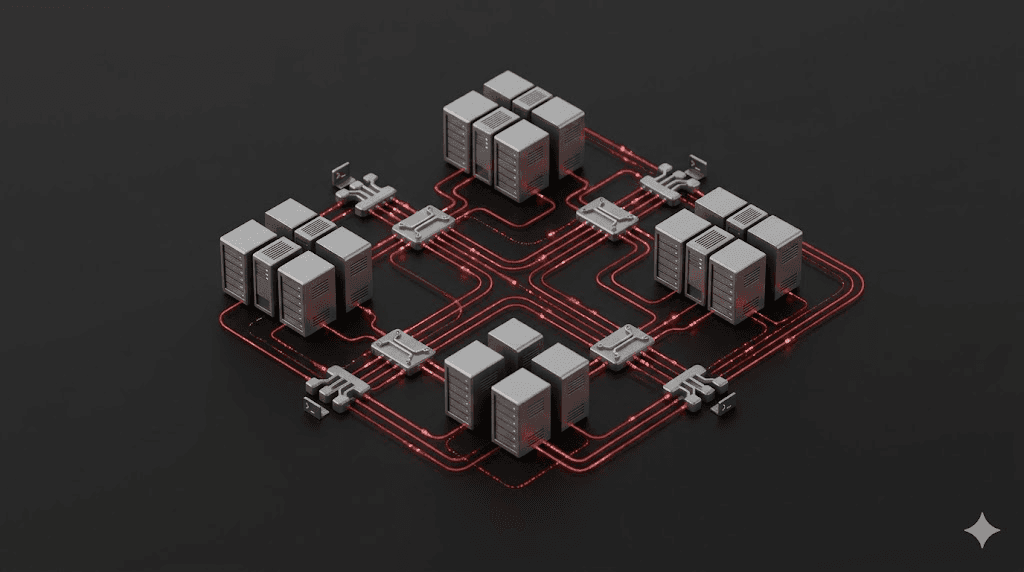
PWA Conversion (Existing Sites)

PWA Conversion (Existing Sites)

Convert existing websites into PWAs by adding service workers, web manifest, installation prompts, and offline support.
Push Notification System

Push Notification System

Implement push notification infrastructure: permission handling, message delivery, user segmentation, and analytics.

Offline-First Application Design

Offline-First Application Design

Architect PWAs for offline-first experience: local data storage, sync when online, and graceful degradation on poor connections.
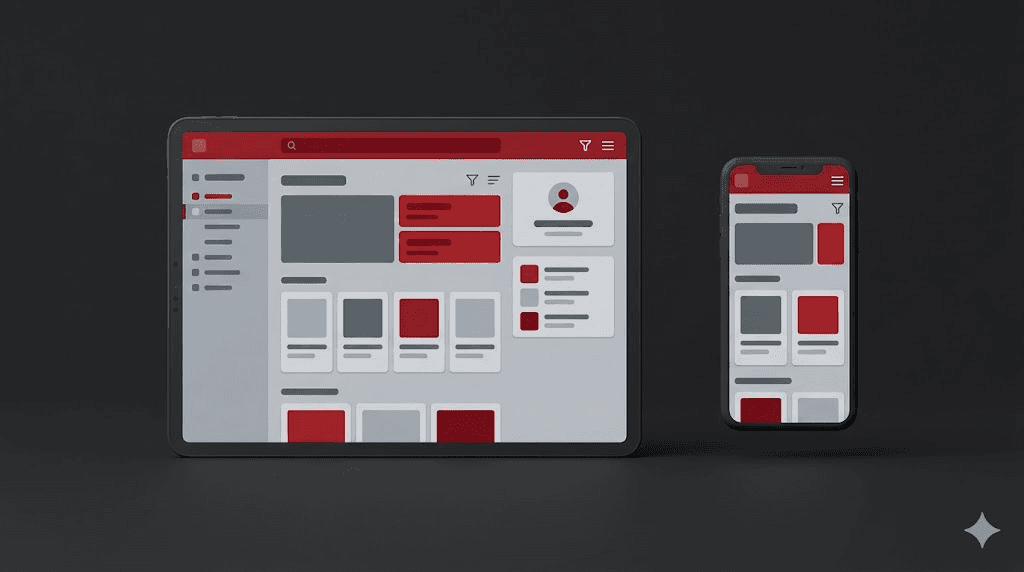
Progressive Web App Use Cases

From e-commerce to field service

PWAs excel in scenarios where offline support, offline-first thinking, and app-like experience matter most.

Product browsing offline

Users browse product catalog even without internet. When online, pages sync and show real-time pricing and inventory.

Shopping cart persistence

Items added to cart persist across sessions, even offline. Users complete purchases when connection returns.

Order tracking

Users track orders, view receipts, and access order history offline—syncing with backend when connection restored.

50+

Clients Served

100+

Projects Delivered

6+

Years in Business

30%

Cost Reduction

Trusted by businesses across the UAE

Teammate App
Alhayat
Gulf Global Commerce
Sky NZ
Mixup
Kaizen Consulting
Eventfinda
Industries We Build PWAs For

Offline-first solutions for your sector

From e-commerce to field service and healthcare—we build PWAs tailored to your industry\'s offline needs and user expectations.

Professional Services

Consultants and agencies use PWAs to deliver services in the field: access client information, proposals, contracts offline.

Real Estate & Property

Real estate agents use PWAs to show property details, contracts, and client information offline when at property sites.

E-Commerce & Retail

Online stores as PWAs let customers shop offline, browse inventory, and complete purchases when connectivity returns.

Healthcare & Medical

Medical staff access patient records, medications, and protocols offline in areas without stable internet—common in field visits.

Field Service & Logistics

Service technicians and delivery drivers use PWAs offline: access job details, capture updates, sync when returning to connected areas.

Education & Training

Students access course materials, videos, and assignments offline—download and sync when connected.

Why Choose Atlio for Progressive Web App Development

We build PWAs with modern service worker architecture, intelligent offline strategies, and app-like performance.

We build PWAs with best practices: efficient service workers, intelligent caching strategies, offline data sync, and push notification systems.

Modern PWA Architecture
Technologies

Modern Tools We Use for PWA Development

react.svg
nextjs.svg
typescript.svg
workbox.svg
firebase.svg
cloudflare.svg
Our Progressive Web App Development Process

From strategy to offline-capable production app

We plan offline strategy, build service workers, add app features, and thoroughly test on real devices and network conditions.

1
PWA Strategy & Planning

PWA Strategy & Planning

We plan PWA architecture: offline strategy, caching approach, sync mechanisms, and feature prioritization.

2
Service Worker Development

Service Worker Development

Build service workers with intelligent caching (cache-first, network-first, stale-while-revalidate), offline fallbacks, and background sync.

3
App Integration & Features

App Integration & Features

Add installation prompts, push notifications, offline data sync, and full-screen app experience—features that blur the line between web and native.

4
Testing & Launch

Testing & Launch

Test on various devices, network conditions (throttled 3G), and offline scenarios. Launch with monitoring and performance tracking.

Why UAE Companies Choose Atlio

Standards we operate by

PWA development succeeds when offline strategy, service worker expertise, and realistic testing are handled by a team experienced with offline-first thinking.

01

Mainland-Licensed Dubai Delivery

Work with a local team that understands UAE market expectations, compliance requirements, and timezone support.

02

Native App Alternative

PWAs deliver native app features—home screen installation, offline support, push notifications—without the app store approval process or friction.

03

Lower Development Cost

Build once in web technologies (React, Next.js) and deploy to all platforms—phone, tablet, desktop—instead of separate iOS/Android apps.

04

Instant Updates

No waiting for app store review. Push updates instantly to your PWA—bug fixes, new features, security patches deployed immediately.

05

Discoverable & Shareable

PWAs are URLs, not app stores. Users find you in search, share links with friends, and install without friction.

06

Works on All Devices

One codebase works on iOS, Android, Windows, Mac, and tablets—no need for separate iOS and Android development teams.

Testimonials

What Our Clients Say

Atlio built our entire platform—web portal, mobile app, and AI-powered features. We launched on time, got to market fast, and scaled without issues. Having one team own the full stack end-to-end made all the difference.

Launched on time, scaled without issues

Darren N. testimonial

Darren N.

Teammate App

What started as a focused engagement evolved into an ongoing partnership. They delivered consistently and adapted as we evolved, ultimately more valuable than the initial delivery.

Built lasting trust through consistent delivery and ongoing commitment

Minu D. testimonial

Minu D.

Sky NZ

They built us a custom inventory and order management system that connects our warehouses across the UAE. Clean interface, works on mobile, and our team actually uses it. Exactly what we needed.

Custom system connecting UAE warehouses

Fatima K. testimonial

Fatima K.

Gulf Global Commerce

They developed a B2B portal where our retailers can place orders, check product availability, and track deliveries. Reduced phone calls to our office significantly and our customers prefer it.

94% on-time delivery, retailers prefer the portal

Shobair H. testimonial

Shobair H.

Alhayat

Our ERP and accounting were a mess of manual workarounds. They built an integration that automated the whole thing. Team saves hours every week now.

Saved 20+ hours per week

David C. testimonial

David C.

Mixup

We've been working with them for over 4 years, they handle our internal systems and support our enterprise clients. Reliable, easy to work with, and they just get things done.

4 years of reliable service

Sarah K. testimonial

Sarah K.

Kaizen Consulting

How We Build Progressive Web Apps

We plan offline strategy, implement service workers, add app features, test on real conditions, and launch for offline reliability.

Discover & Prototyping

We shape brands through exploration, applying in-depth research to challenge assumptions at every turn. We'll also create a prototype suitable for computers and mobile devices.

Design & Build

Using your feedback on the prototype, we will make any changes before starting the code development work. We use an agile development model with ongoing reviews and iterations.

Deliver

Ongoing testing is critical to agile development to get to the code refinement stage. We then implement the software application and provide your team with training and support.

Progressive Web Apps: One Build, Every Device, No App Store Between You and Your Customer

The hardest part of mobile is not building the app—it is getting it onto the customer's phone. Store search, download, install, sign-up: every step loses users. A progressive web app removes the funnel entirely. Your customer taps a link—from WhatsApp, Instagram, or Google—and is inside a full app experience in seconds, offline-capable and installable to the home screen if they want to keep it. For most UAE SMEs weighing "do we need an app?", the PWA is the answer that costs one build instead of three.

Hand holding a phone showing a grey app interface installing to the home screen with one red install button

What a PWA actually gives your business

A PWA gives your business four things a normal website cannot: near-instant repeat loads and full offline access through service-worker caching, push notifications on Android, desktop, and modern iOS, a single codebase that serves every screen, and pages that rank on Google and share by URL like any web link.

  • App experience at link-click speed. Service workers cache the shell and content, so repeat visits open near-instantly—even on weak connections or fully offline.
  • Push notifications without the store. Order updates, offers, and reminders re-engage customers on Android, desktop, and modern iOS—the re-engagement channel that used to require a native app.
  • One codebase, every screen. Phone, tablet, and desktop are served by the same build. Every improvement ships everywhere at once—no store review wait, no version fragmentation.
  • Found by search, shared by URL. Unlike a native app, every screen of a PWA can rank on Google and be shared in a message—your product marketing and your product are the same artifact.

Where PWAs shine—and where they don't

Commerce, bookings, loyalty programmes, service portals, internal tools, restaurant ordering, classifieds—anywhere the value is content, transactions, and notifications, a PWA delivers the app experience at a fraction of dual-platform cost. The genuine exceptions: products needing deep hardware integration (Bluetooth peripherals, advanced camera pipelines), heavy 3D, or the App Store as a discovery channel in itself. We build native and cross-platform apps too, so the recommendation you get follows your use case—not our preference.

What shapes a PWA project's scope

Whether we convert your existing site or build fresh, the same variables drive timeline and cost: offline depth (read-only caching versus full offline workflows with background sync and conflict resolution), how much push notification logic you need (a simple broadcast versus segmented, event-triggered messaging), and integration surface—payments, inventory, CRM, or a booking engine. Device and network testing adds real time too: we validate installation and offline behaviour across Android, desktop, and iOS Safari, plus throttled 3G and fully offline conditions, since each platform handles caching and storage limits differently. Converting a solid existing site takes weeks; a full product build with sync and integrations takes a few months. The free consultation ends with a fixed written proposal either way.

PWA vs native app vs website: a quick decision guide

Weighing a full native build against a progressive web app? This is the trade-off we walk UAE clients through. For most commerce, booking, and service products, a PWA delivers the app experience without the app-store cost or the dual iOS and Android codebase that cross-platform app development usually demands.

What you needProgressive Web AppNative appStandard website
Works offlineYes — service-worker cachingYesNo
Install to home screenYes — from the browserYes — via app storeNo
Push notificationsYes — Android, desktop & iOS 16.4+YesNo
App-store listingOptional (via wrapper)RequiredNo
Found in Google searchYesNoYes
Codebases to maintainOneTwo (iOS + Android)One
Typical costA fraction of dual-nativeHighest — two buildsLowest

Need genuine store presence or deep hardware access? Our native mobile app development team ships iOS and Android, and our cross-platform React Native development covers apps that must live in both stores from one codebase. For most UAE SMEs, though, an installable PWA reaches every device for a fraction of the cost.

PWA business cases we build for UAE companies

A PWA earns its keep where connectivity is uneven, app-store friction costs conversions, or the same experience has to work on desktop and mobile. The UAE cases below are the three we build most often, each chosen because a native app would have cost more and converted worse.

  • Retail with offline cash-on-delivery checkout. Shoppers browse the catalogue and build a COD order even when mall Wi-Fi or mobile signal drops; the order syncs the moment the connection returns.
  • Restaurant & F&B ordering. One installable link handles dine-in QR ordering, delivery, and loyalty — no app-store download between a hungry customer and their basket.
  • Logistics & driver tools. Delivery and field teams open job lists, capture proof of delivery, and update status offline, then sync at the depot — no dead time on the road.

What a PWA costs versus a dual-native build

Because a PWA is one codebase instead of two, it typically costs a fraction of a matching iOS-plus-Android build and carries a lower total cost of ownership — one artifact to maintain, not three. Converting a solid existing site into a PWA starts from around AED 12,000, while a full offline-first product with sync and integrations sits higher. Two services we most often ship as installable PWAs are custom website development and ecommerce web design. Tell us your use case and the free consultation ends with a fixed written quote either way.

Frequently Asked Questions

What is a Progressive Web App (PWA) and how is it different from a native app?
A Progressive Web App is a web application that works offline, loads instantly, and feels like a native app—but it is accessed through a URL and works on all devices without app store installation. Unlike native apps (iOS, Android specific), a PWA is built once with web technologies and works everywhere. Advantages: lower cost, instant updates, no app store approval, discoverable. Disadvantage: no access to device hardware (camera, sensors) like some native features.
How does a PWA work offline?
Service workers—a technology that runs in the background—intercept network requests and serve cached content when offline. You configure caching strategies: cache-first (serve from cache, fallback to network), network-first (try network, fall back to cache), or stale-while-revalidate (serve from cache but fetch fresh in background). Users stay productive offline and sync when connection returns.
What are some well-known examples of a PWA?
Recognisable examples include Starbucks (its ordering PWA cut load times dramatically for customers on slow connections), Pinterest, Uber's booking flow at m.uber.com, and Trivago's search app—each swapped a slow mobile site or a native-app-only experience for an installable, offline-capable web app. Netflix's web app, by contrast, is not built as a PWA: it has no installable manifest or offline service worker, because Netflix's core requirements—native app-store presence and DRM-protected downloads—are better served by dedicated iOS and Android apps. That contrast is a useful illustration of when a PWA fits and when a native app is still the right call.
Is the PWA approach still relevant, or has it been overtaken by other technology?
Very much still relevant—if anything, browser support has gotten stronger. iOS Safari added push notifications for installed PWAs in 16.4, and every major browser now supports service workers, home-screen installation, and offline caching. What changed is expectations: a PWA is no longer pitched as a full native-app replacement for every product, but as the fastest, lowest-cost way to give a web product offline access, installability, and push notifications when deep device hardware access is not the priority. For the majority of commerce, booking, and service products we build for UAE clients, that is exactly the requirement.
Can PWAs send push notifications like native apps?
Yes. PWAs support push notifications via Web Push API. Users opt-in to notifications, then you can send them messages even when the app is closed—just like native apps. Perfect for re-engagement: order updates, promotional offers, reminders.
How do users install a PWA?
On Android and desktop, clicking the "Install" prompt adds the PWA to the home screen—it looks and behaves like an app. On iOS, users add the PWA to home screen via Safari's "Add to Home Screen" feature. No app store required. Updates happen instantly in the background.
Do progressive web apps work properly on iPhone?
Yes—much better than their old reputation suggests. Modern iOS Safari supports home-screen installation, offline service workers, and (since iOS 16.4) web push notifications for installed PWAs. Some limits remain versus Android—stricter storage eviction and no install banner, so users add to home screen manually—and we design around them: install guidance in the UI and offline strategies that respect Safari's storage rules.
Is a PWA better than a native app for my business?
It depends on your use case. If you need home screen presence, offline support, and reach the broadest audience, a PWA is ideal. If you need deep device hardware access (camera, sensors, Bluetooth) or require app store discoverability, a native app is better. Many businesses launch both: PWA for web reach, native apps for specific features.
What about app store discoverability? Will users find my PWA?
PWAs are discoverable in Google Play Store and Microsoft Store (recent changes), and always discoverable in web search. Native apps may have higher discoverability in app stores, but PWAs are shareable via URL and rank in search engines—advantages native apps lack. Your marketing reach is broader, not narrower.
Progressive web app vs React Native: how do I choose?
Choose by distribution and hardware needs. A PWA wins when you want one URL reaching every device instantly—no store review, instant updates, search-engine discoverability—and your feature list is content, commerce, forms, and notifications. React Native wins when you need store presence as a marketing channel or deeper device integration. Costs are comparable at MVP scale; the PWA usually stays cheaper over time because there is exactly one artifact to maintain.
Can you convert our existing website into a PWA?
Usually yes, and it is often the highest-ROI path: we add a service worker with the right caching strategy, a web app manifest, offline fallbacks, and push notifications to the site you already have. If the current site has solid foundations, conversion takes weeks rather than months. We audit it first and tell you honestly whether converting or rebuilding is the economical route.
Can a PWA be listed in app stores like a native app?
Yes, on most platforms. A PWA can be wrapped as a Trusted Web Activity and published to the Google Play Store, and packaged for the Microsoft Store, so you keep a single codebase and still get a store listing. The Apple App Store does not accept a plain PWA, but on iPhone users install it straight from Safari to the home screen. Many UAE clients launch the installable web PWA first and add a Play Store wrapper only if store presence is a marketing channel they want.
PWA vs native app: what does each cost in Dubai?
A PWA is usually a fraction of the cost of a dual-platform native build because there is one codebase instead of separate iOS and Android apps and two app-store release cycles. Converting an existing site into a PWA starts from around AED 12,000, with larger offline-first products costing more depending on sync, integrations, and push logic. A comparable native app means two separate builds plus ongoing maintenance on both, so its total cost of ownership is typically the highest of the options. We give you a fixed written quote after a free consultation so you can compare like for like.
Does a PWA help or hurt SEO?
A PWA helps SEO. Every screen has a real URL that Google can crawl, index, and rank, and the same service-worker caching that powers offline mode also makes repeat visits load almost instantly - and Core Web Vitals are a ranking signal. Unlike a native app hidden inside an app store, a PWA is fully shareable by link and discoverable in search, so your product and your marketing are the same asset.

Ready to Transform Your Business?

Book a free 30-minute consultation. We'll discuss your challenges, explore opportunities for automation, and show you exactly how we can help.

© 2026 Atlio All Rights Reserved